Adventures in Potty Training!

September 30, 2024

Beginning the toilet training process can seem daunting but if done at the right time in a gentle and collaborative way the process can be less challenging then one may think. Here are some guidleines and suggestions for successfully supporting your child with using the toilet indpendently.


Sensitive Period for Toilet Learning:


15 – 30 months: The child will show interest and typically signs of physical and emotional readiness, participate willingly, and transition naturally to using the toilet successfully.

 After the Sensitive Period has passed, toilet learning is more challenging for the child.

Readiness:


As your child approaches age three, you may be bombarded with advice and expectations about toileting from everyone around you- family, friends, neighbors, and others. However, toilet learning can become a long and frustrating process if you try to start before your child is ready. One of the most crucial aspects of success is timing, so it is essential to understand the physical and emotional signs that your child is ready to begin. Preparing yourself, the rest of the family, and the child’s environment will also help to ensure a successful transition.


Preparing the Environment: Physical


  • Make the bathroom the area where you change diapers and offer the child to sit on the potty.
  • Dispose of solid waste in the toilet and flush, helping the child make a strong connection between elimination, the toilet, and the flushing sound.
  • Potty Training books for kids to look at and hear.
  • Floor potty or cushy potty seat (to alleviate the fear of “falling in.”)
  • Training pants, lots……….no diapers or pull-ups that may confuse. The feeling of getting “wet” is a natural consequence and will help the child toilet learn more successfully.
  • Clothing that the child can easily “pull down” and “pull up” themselves (sweatpants, leggings, no zippers, buttons, buckles, etc.).


Preparing the Environment: Psychological


  • Engage in matter-of-fact conversations about the body, body parts, and elimination. Teach proper names, even though you and your child may prefer to use more familiar names daily.
  • Tell toileting stories about older siblings, cousins, or even parents (“Everyone older used to wear a diaper, but now they all wear underwear.” – this may be a revelation!)
  • Encourage by forecasting the future. (“When you start using the toilet, you won’t need diapers anymore, can wear soft underpants with paw patrol on them, won’t have to wait to be changed by an adult,” etc. )
  • It is important to try when there are no unforeseen changes to routine, such as travel, moving, a new baby, visitors, or illness.


SIGNS OF PHYSICAL READINESS:


  • Has mastered basic motor skills, such as walking, undressing, and talking.
  • Has bowel movements around the same time each day.
  • They are aware they have urinated or had a bowel movement.
  • Has control of bladder and bowel muscles: indications of this are if the child has a dry diaper after napping and a dry diaper after 2 hours.

****MOST CHILDREN ARE PHYSICALLY READY BEFORE THEY ARE EMOTIONALLY READY. ****


SIGNS OF EMOTIONAL READINESS:


  • Tells you that they need a diaper change.
  • Is interested in others using the toilet.
  • Is receptive to trying to sit on a potty chair or toilet.
  • Talks about wearing “big boy/big girl underpants.”

Consistency is key. Once you have determined that your child is ready to begin toilet learning, consistency is crucial for their success.

Having underwear on one day an

d a diaper the next is confusing and can set back the toilet learning process. Use towels, plastic bags, and double training pants to secure leaks, messes, etc. It is common and normal for accidents to occur. When a child does soil themselves, be very calm and matter-of-fact with your responses.


“Oh, you are wet; let’s go to the bathroom to change and get dry.”

“It is ok; you are still learning.”


ESTABLISH PRACTICAL EXPECTATIONS AND ROUTINES


“In our house, we always sit on the potty…

…When we wake up.”

...After breakfast.”

…before getting in the car.”

…when we get home from  school.”

…Before bath/bedtime.”


USE YOUR VILLAGE FOR SUPPORT:


As a parent, you can get emotionally involved with this process. During this time, you must be supported by your spouse, partner, grandparents, aunts and uncles, teachers, etc. Prepare everyone around you for the experience and enlist other adults in the environment to support the process; stress and frustration on the adults’ part will impede the child’s success.
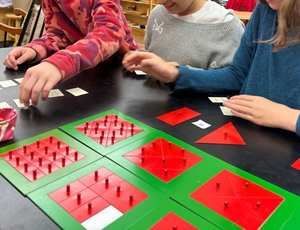
Children explore geometric equivalence using Montessori fraction and area materials.
February 2, 2026
Discover how Montessori geometry introduces equivalence through hands-on exploration, helping children build deep understanding of area, fractions, and mathematical reasoning.
Illustration of ancient Egypt with pyramids and waterways, showing early geometry origin
January 26, 2026
Explore the Montessori story of geometry’s origins, from ancient Egyptian rope-stretchers to modern classrooms, inspiring children’s wonder and curiosity.
Child with crossed arms and an upset expression, showing big emotions during a challenging moment.
January 19, 2026
Few experiences challenge us adults more than feeling disrespected by our children. When a child talks back, shouts hurtful words, or responds with anger, it can strike at the heart of our sense of connection. Yet when we examine these moments more closely, they often reveal something deeper: a child struggling with big feelings and an adult unsure how to respond without escalating the situation. Montessori education reminds us to look beneath behavior and see the developing child who is still learning emotional regulation, communication, and perspective-taking. Disrespectful words are often less about defiance and more about overwhelm. When Children Say, “I Hate You” Children sometimes resort to strong words when they realize they cannot change an adult’s decision. A request to go to a friend’s house or a desire for more independence can quickly turn into an emotional outburst when the answer is “not today.” For many children, especially younger ones, emotions tend to be extreme. They feel that they love a parent when things go their way and hate them when they feel thwarted. As adults, however, we hear the word hate with its full weight and meaning. Merriam-Webster defines hate as “extreme dislike or antipathy: loathing,” and adults often reserve it for moments of deep hurt. Children do not. They use the word as a blunt tool to express frustration, disappointment, or a sense of powerlessness. Rather than reacting to the word itself, Montessori-informed parenting encourages us to respond to the feelings beneath the word. A calm acknowledgment, such as “You’re really angry right now,” helps our children feel seen and understood. The goal is not to accept disrespectful language but to model emotional literacy. By naming the emotion instead of punishing the outburst, we can show children that big feelings can be handled with clarity and calm. When adults overreact to the word hate, children may learn that it is an effective way to provoke a response. When adults remain grounded, children begin to understand that emotions can be expressed without resorting to hurtful language. When Children Talk Back Those angry last words, muttered insults, or attempts to reopen a closed discussion (a.k.a. ‘back talk’) are often viewed as the pinnacle of disrespect. For adults, it can feel like a direct challenge to authority. For children, however, back talk usually signals that the situation has reached a boiling point. They are overwhelmed, upset by a limit, or trying to have the final say when they feel powerless. Some children also learn that persistent pushback can wear down adults’ resolve. If arguing leads to a changed decision even once, children will understandably try again. One effective approach is simply not to engage. Ignoring back talk while still holding firm to the original limit removes the reward of an emotional reaction. It communicates, “The boundary is set, and I won’t be pulled into a power struggle.” This is not permissiveness. It is clarity. When adults refuse to escalate, children gradually stop using back talk as a tool. Over time, they experience a powerful model of self-control: an adult who remains peaceful, firm, and grounded even in tense moments. Allowing a child to have the last word can feel counterintuitive. Yet it often reduces conflict, shortens arguments, and preserves the adult-child connection. It teaches children that relationships do not depend on “winning” but on mutual respect and emotional resilience. Choosing Connection Over Control Disrespectful language can trigger a strong emotional response in us as adults. It can feel personal, even when it isn’t meant that way. In heated moments, it can help to pause and ask a simple question: Is the goal to be right, or is the goal to remain close? Children need loving boundaries, but they also need adults who can maintain connection even when emotions run high. Responding calmly to disrespect does not mean accepting the behavior. It means addressing the root cause rather than reacting to the symptom. Montessori parenting encourages adults to guide children with both firmness and grace. We focus on teaching children not only what behavior is expected, but also how to manage the feelings that fuel behavior. When adults model emotional steadiness, children learn by example. And as they grow, relationships deepen rather than fracture. Over time, the decision to prioritize connection builds trust, strengthens communication, and helps children develop the internal tools needed for respectful interactions. Visit us here in Worcester and Auburn to see how we help families invest in nurturing long-term relationships!
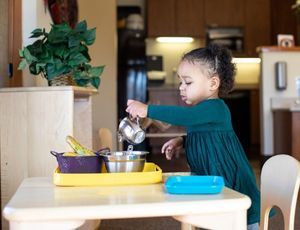
Toddler pouring water in a Montessori Practical Life activity, practicing independence and coordinat
January 12, 2026
Discover how a Montessori prepared environment—at school or home—supports independence, peace, and purposeful activity through thoughtful design.
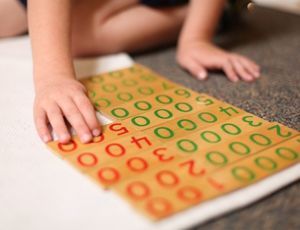
Child using Montessori decimal cards to explore quantity and place value through hands-on math work.
January 5, 2026
See how Montessori math builds true understanding through hands-on materials, nurturing every child’s natural mathematical mind from concrete to abstract.
Montessori’s Living Curriculum: Biology in the Classroom & Beyond
June 30, 2025
Experience how Montessori brings biology to life, nurturing wonder, moral awareness, and a deep sense of connection to the living world.
Our Montessori Bookshelf: Wonders of the Natural World
June 30, 2025
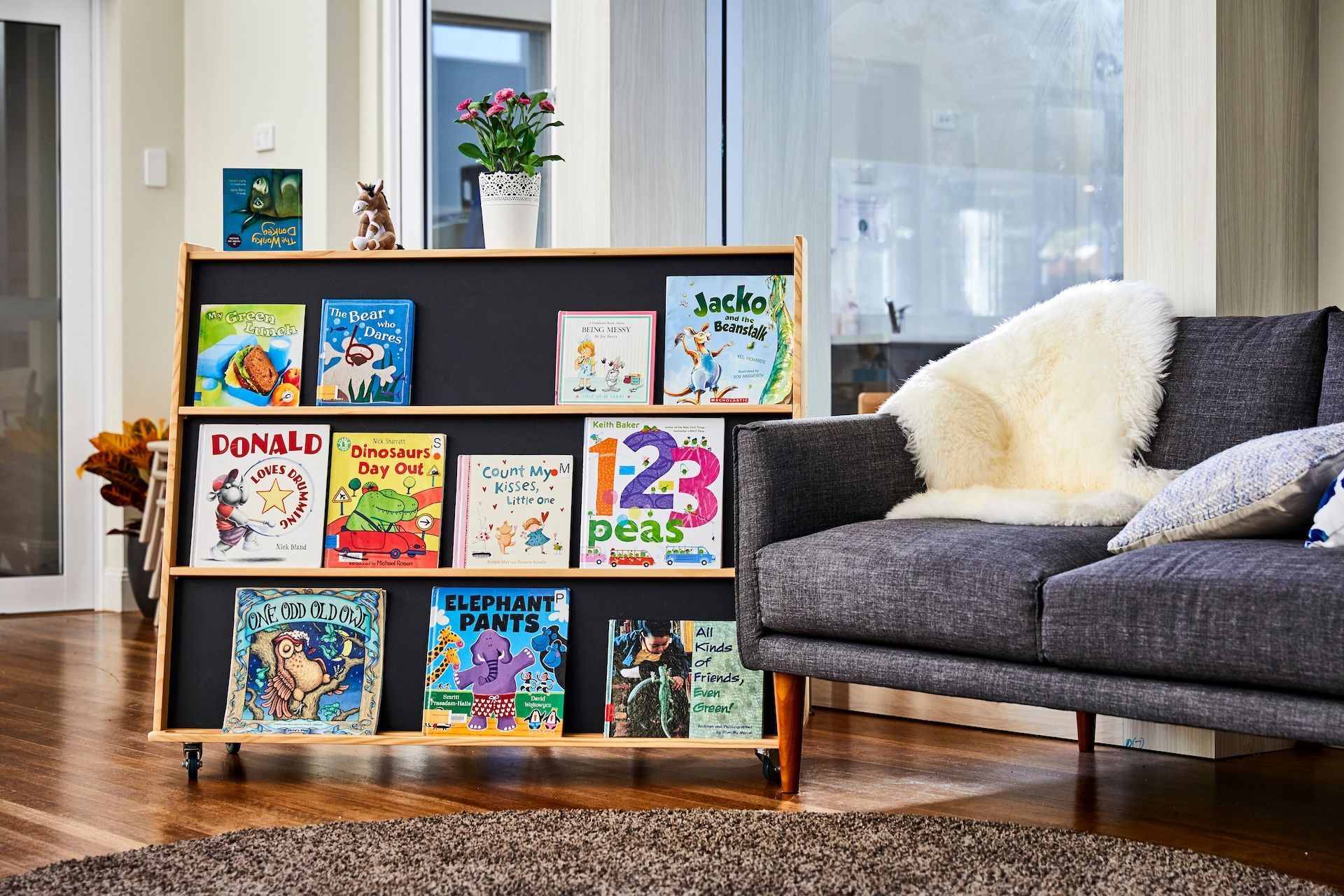
Discover beautiful nature books that spark wonder, curiosity, and a lifelong love for the natural world—perfect for Montessori-inspired families!
Wonder and Words: How Montessori Builds Language Through Biology
June 23, 2025
See how Montessori nurtures curiosity and builds a love for biology by connecting hands-on exploration with rich, meaningful language.
A Different Kind of Homework: A Montessori-Inspired Summer
June 9, 2025
Trade worksheets for wonder! Explore our Montessori-inspired summer adventure list to spark joy, curiosity, and real-world learning.
Creating Community in Montessori Toddler Environments
June 2, 2025
Discover how Montessori builds toddler communities where belonging, growth, and meaningful connection are nurtured every day.
Show More